
LED video walls, booth to keynote.
What an LED wall is, where it goes, and how it fits your booth or stage. Pixel pitch from 1.5 mm to 4.8 mm, flat or curved, sized in feet and metric on 500 mm tiles.
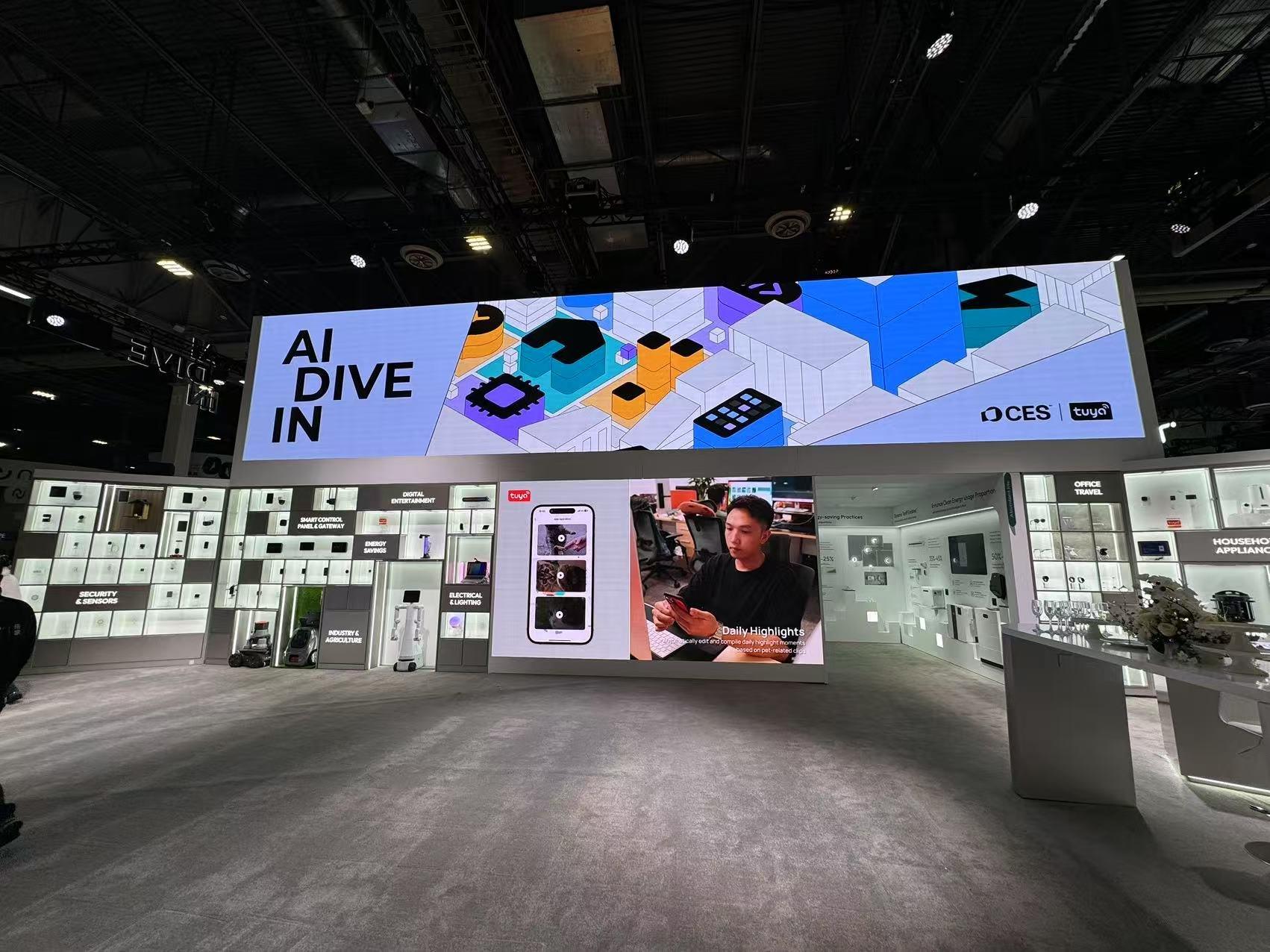
One system, every placement.
Booth walls
The wall the booth is built around, sized to your footprint and your booth frame.
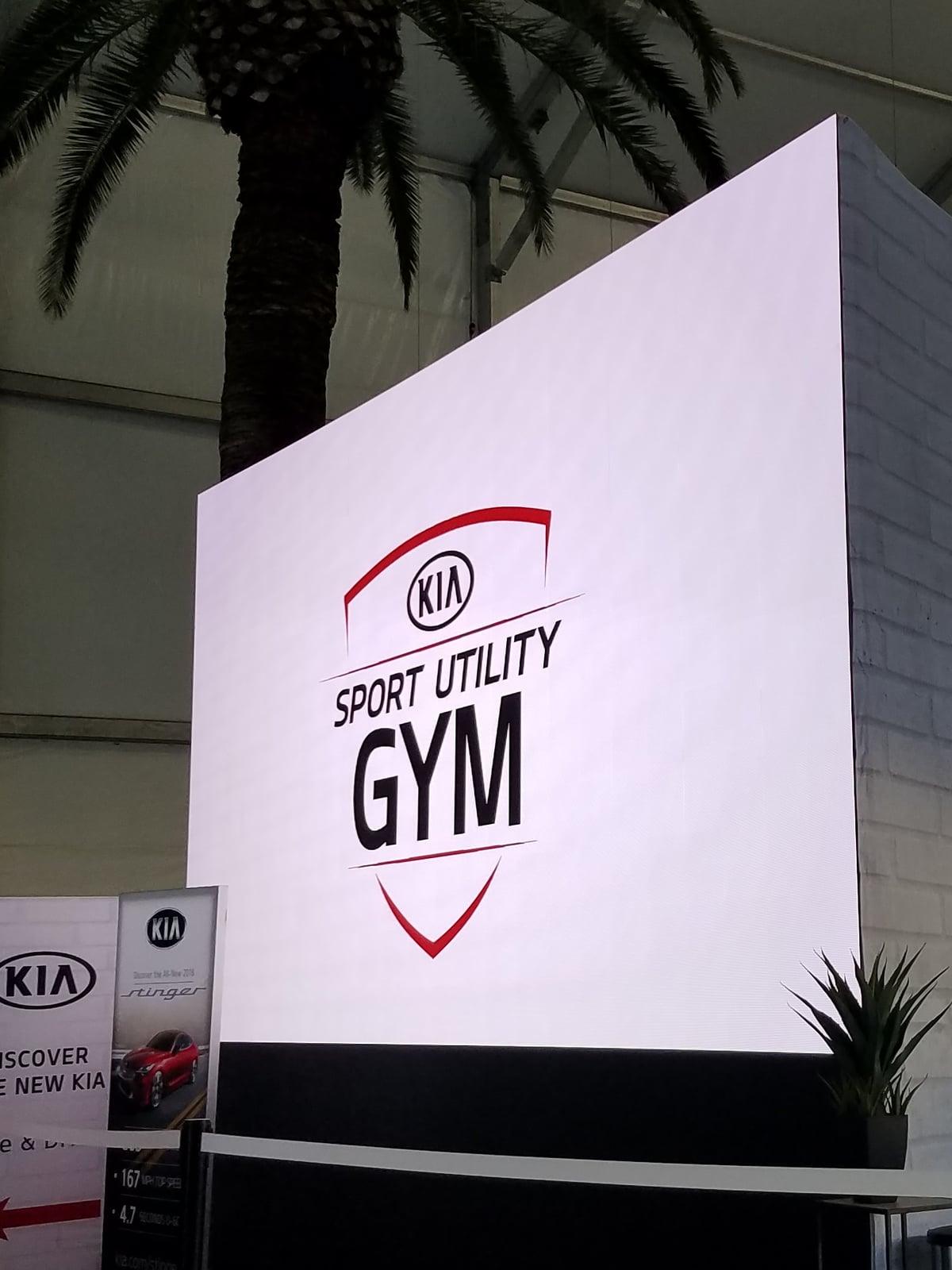
Keynote and stage walls
A clean brand canvas behind the speaker, flat or curved, run to the cue sheet.
Hanging and ground-supported
Rigged overhead as a feature, or ground-stacked on structure. We handle the rig.
Curved, window, and floor
Curves and columns, window mounts in transparent mesh, and walkable LED floors.
Pitch, fit, and who installs.
Pixel pitch ladder
Custom fabrication
Install + crew
LED wall questions, answered.
What size can the wall be?
From a 6-foot panel to an 80-foot wall. We size in feet and metric on 500 mm tiles and name the closest achievable dimension and the 90-degree corner option.
Does it fit our booth frame?
Yes. The tiles drop into standard 500 mm booth framing with a 90-degree corner lock. Tell us the frame and we confirm fit before the show.
How should we prep content?
We confirm the resolution and aspect ratio for your exact wall and pre-test the content on the rig before show day so it maps clean across the tiles.
What is an LED video wall?
A screen built from LED tiles joined edge to edge into one seamless picture. Because it is modular, it can be built flat or curved to almost any size or shape, from a booth wall to a keynote backdrop.
What is pixel pitch?
The distance from the center of one pixel to the next, in millimeters. A finer pitch gives a sharper picture up close and costs more, so we match it to how close the audience or a camera gets. Our range is 1.5 mm to 4.8 mm.
Does it work in a bright room or outdoors?
Yes. Indoor tiles are bright enough for a lit show floor and dim down for a dark keynote room. Outdoors takes an outdoor-rated tile; our 4.8 mm is built for daylight and for viewing from a distance.
Why an LED wall instead of a flat-panel display?
Pick LED when the picture has to be seamless, bigger than a single display, going somewhere very bright or outdoors, or a shape other than a flat rectangle. For menus, schedules, and demo loops that people read up close, a flat-panel display is usually enough.
Can we play our own content?
Yes. Video, still graphics, animation, and a live feed from a camera or anything else that outputs video. Send the files ahead and they go on the wall as built.
What makes content look good on a wall?
Build it at the wall's pixel size or larger so it stays sharp, and design for the viewing distance: bigger type and bolder shapes the farther back people stand. Use the shape, tall or ultra-wide, rather than fighting it, and keep video at 60 fps so motion stays smooth.
How much power does it need?
It depends on the tile count and pitch. Send us the wall and we spec the power with the quote, so you can order the circuits from the venue before the show.
Send us the wall.
Drop your booth or stage size, your city, and your dates. We'll send the quote.
Get a quote